
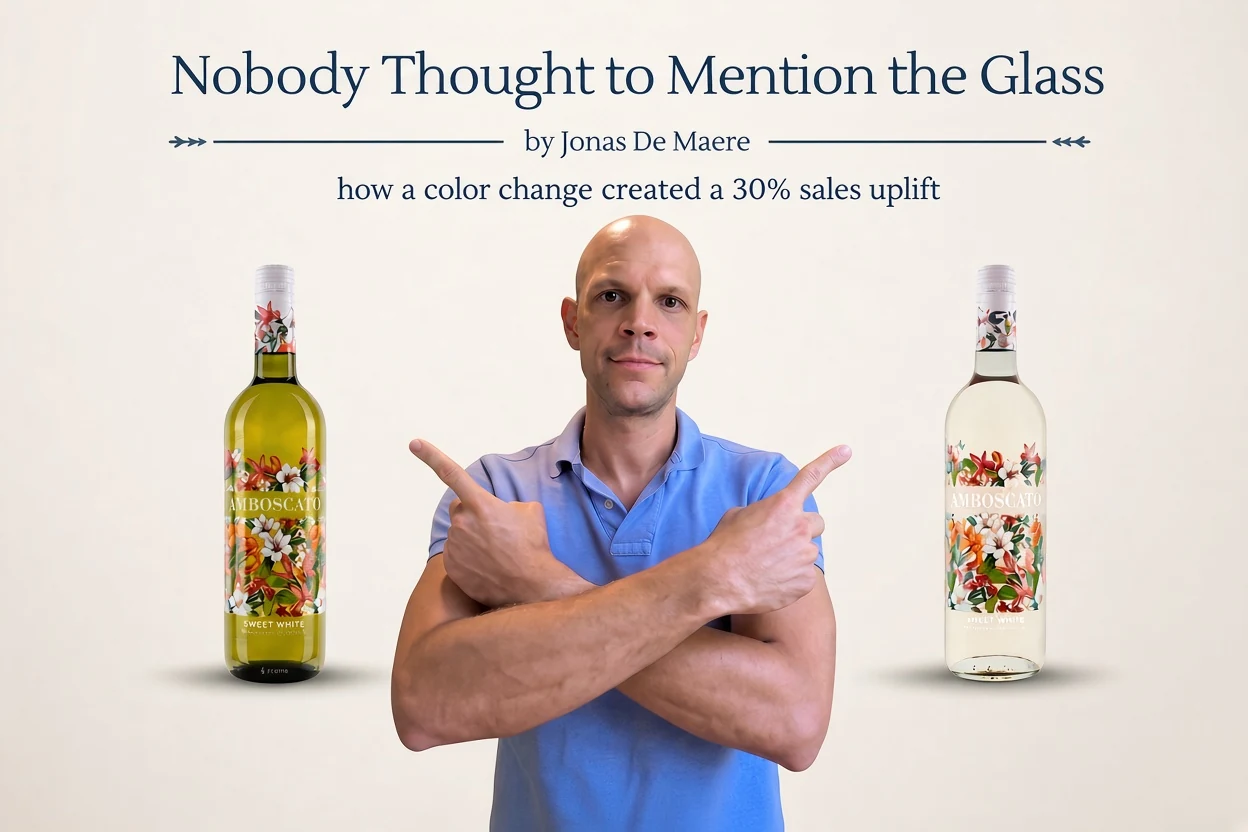
Alma Wines called us in July. Their client was out of stock. Sales were running ahead of the previous year, and they wanted to know why our forecast had not seen it coming.
First thing we did was to check for any mistakes in the model. We can't hide behind the data. The product has been on shelf for five years. About as much clean history as anyone gets. A year earlier we had called sales flat, and on what we had then, flat was right.
We decided to get everyone in the same room: the retailer, the importer, and Alma Wines, as the producer. We worked through promotional calendars, distribution changes, competitor activity. Some way in, someone at Alma mentioned in passing that they had changed the bottle six months earlier. Green glass to clear.
That was the answer, and it arrived as a footnote. EUREKA!
It looks like a clear glass bottle for this type of wine gets picked up more often. Nobody was withholding anything. Alma made a packaging decision, and to them it was a design decision with no obvious reason to belong in a supply chain conversation. Which is why it took six months and an empty shelf to travel.
The timing we could not fix. Alma produces to forecast and waits for the next vintage, which is September. We were talking in July. Understanding why demand moved does not put liquid in a tank two months early.
What changed is that we could attribute the uplift instead of arguing about it, and rebuild the next 52 weeks around it. That forecast is roughly twenty percent growth. The glass change was a good decision.
The frustration was aimed at the forecast, and the forecast was not the problem. Though suppose Alma had mentioned it a year earlier, in a note about packaging. Would anyone have argued for a twenty percent override on the strength of a bottle color? I am not certain I would have.